How Dense is Boulder?
People like to argue about how dense Boulder is, as if there’s a single answer. There isn’t. Depends on what you mean by “dense” 😉.
This came up at the recent TEDx Salon on Housing:
Me: 74% of Boulder’s residentially zoned land is low-density.
Mark: People always talk about low density, but Boulder is more dense than … (XYZ list of cities).
Who’s right? Technically, both of us. Annoying, I know 🤷. Here’s why:
Population density = total population / total land area. Easy math, important nuance.*
For Boulder:
Population: 106,803
Land Area: 26.55 sq mi
Population Density: ~4,025 people/sq mi
How do we compare?
Berkeley, CA: 11,917/sq mi
Santa Monica, CA: 11,067/sq mi
Alexandria, VA: 10,677/sq mi
Santa Cruz, CA: 4,942/sq mi
Tempe, AZ: 4,521/sq mi
Ann Arbor, MI: 4,392/sq mi
Boulder, CO: 4,025/sq mi
Eugene, OR: 3,998/sq mi.
Madison, WI: 3,391/sq mi
Austin, TX: 3,007/ sq mi
Fort Collins, CO: 2,969/ sq mi
Chapel Hill, NC: 2,871/sq mi
Gainesville, FL: 2,234/sq mi
Boulder is smack in the middle of this grouping, but that is because I made the list. Depending on where you draw the comparison list, you can make Boulder look dense or sprawled. Choose your own narrative.
Just for fun: San Sebastián, Spain (my favorite mid-sized city in the world) has nearly the same land area as Boulder (26.87 sq mi) and a population density of 7,766/sq mi.
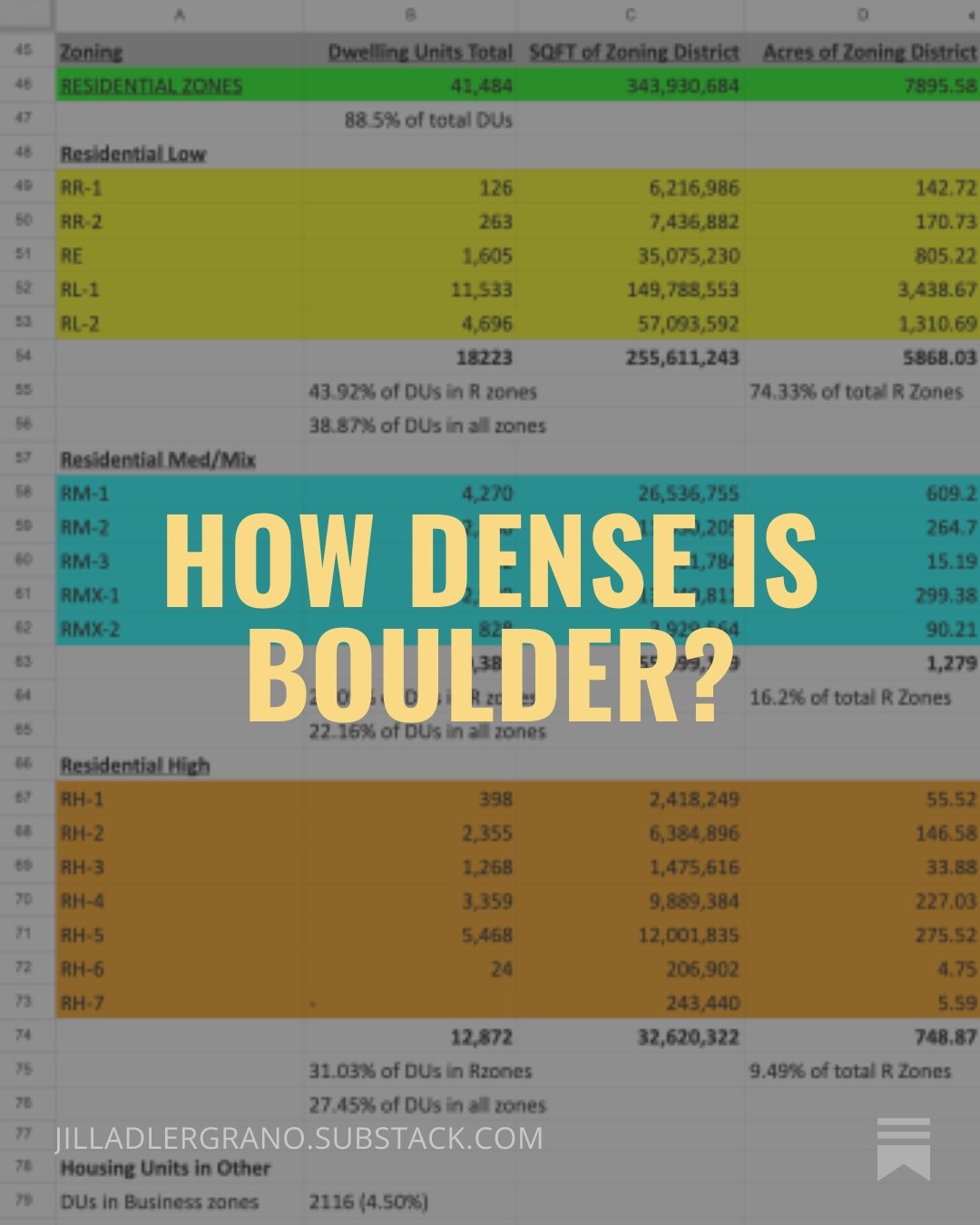
Zoning density = how many dwelling units (DUs) per acre the city allows. This is the rulebook that determines what gets built.**
Let’s focus on Boulder’s residential zones (where 88.5% of the city’s homes are located). Boulder has many residential zones, but they can be categorized into three broad buckets:
Low-Density (2–6 DUs per acre) - vast majority is single-family housing
Covers 74.33% of residential land
Delivers 43.92% of units in residential zones (38.87% of total DUs)
Medium & Mixed Density (6–20 DUs per acre) - many single-family homes, plus single-unit attached homes and luxury townhomes
Covers 16.2% of residential land
Delivers 25.05% of residential DUs (22.16% of total DUs)
High-Density (recently up to 28+ DUs per acre, but now an intensity standard) - condominiums and multifamily rental housing
Covers 9.49% of residential land
Delivers 31.03% of residential DUs (27.45% of total DUs)
Translation: high- and mixed-density zones punch way above their weight. They cover only a quarter of residential land but produce over half the homes.
Dan Parolek, author of Missing Middle Housing, recommends a more balanced breakdown: 50–60% low, 25–30% medium, 15–20% high.
Should Boulder become denser? That’s a community conversation. But it’s worth noting that cities with higher density often support stronger small-business ecosystems, more vibrant arts and culture, and better public transit. We also know that building more housing within existing infrastructure helps protect agricultural land, reduces wildfire risk, and makes better use of limited resources like water.
With the new state Housing in Transit-Oriented Communities bill (HB23-1313) in motion, I’m not proposing major zoning changes in Boulder right now … I’d rather see how that plays out first.
But there are steps we can take now to help add workforce housing:
Identify City-Owned Land where we can build the kind of housing Boulder residents need, because the land cost will be stripped away.
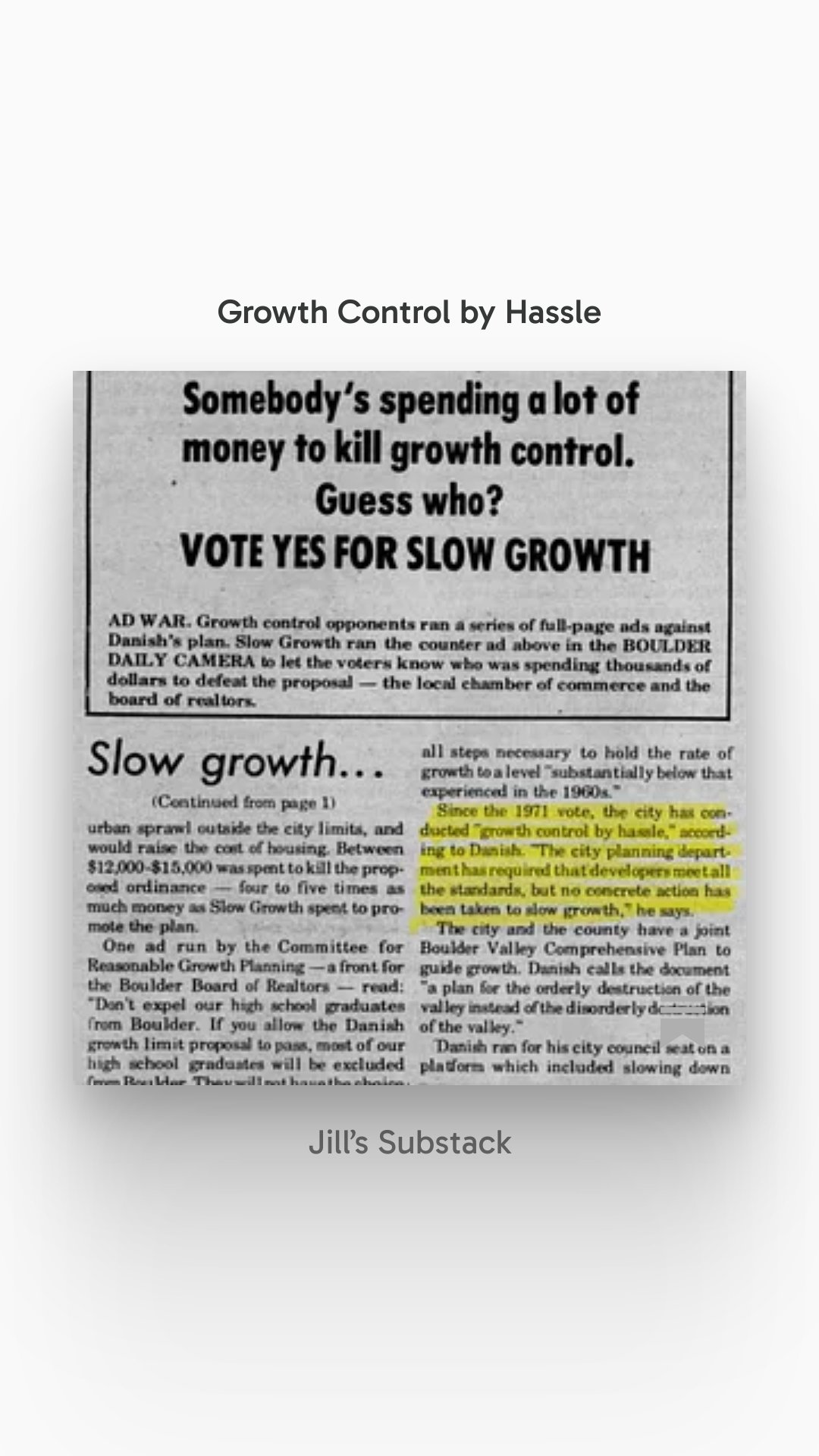
Reform the Development Process. Time to get rid of “growth control by hassle.” Talk to anyone who has tried to build housing or start a small business here, and they will describe the same experience: delays, ambiguity, endless reviews.
Address Second Homes & Speculative Buying. Second homes and speculative investors distort the market. Prices go up, year-round residents get squeezed out, and vacancy rises. We need smart policy here before things get worse.
Big, Bold thinking, like how to best use the Airport and Area 3 to support housing, parks, small businesses… mixed use.
Neighborhood-scale density near connector road intersections, with walkable amenities and new housing types
Intergenerational housing that matches students with seniors
Land Back. Some form of reparations. This city sits on stolen land … full stop. Our great-grandparents took it. And now we fight over who gets to “own” it and how dense it should be, as if we didn’t all inherit a crime scene. (I literally have a radio show on KGNU called Who Owns Boulder — the title kind of answers itself.)
But what if we gave some back? Not as a gesture. Not as a token. But as part of an actual long-term commitment to justice and stewardship.
We still have public land: Area III, the municipal airport, other scattered parcels. What if we got serious — like, radically serious — and partnered with Indigenous Tribes to return some of that land?
It’s not impossible. It’s just incompatible with everything we’ve built our housing system on so far.
*While Boulder’s planning department has its own population count, it is helpful to use Census data here when comparing Boulder to other cities
**I am using the spreadsheet in the image above, which reflects 2023 data (post-East Boulder Sub-Community Planning). This spreadsheet came directly from the Planning Department, but I categorized it and did the math. The city has since built more dwelling units, but, to my knowledge, has not rezoned.
Stay up to date on the latest trends in real estate.
May 20, 2026
Sundance Film Festival Lodging
January 23, 2026
November 17, 2025
History and Impact of the "Hassle"
July 8, 2025
Jill Grano's Full Circle Career: Luxury Listings, Affordable Housing, and Lasting Impact
Jill Grano | April 27, 2025
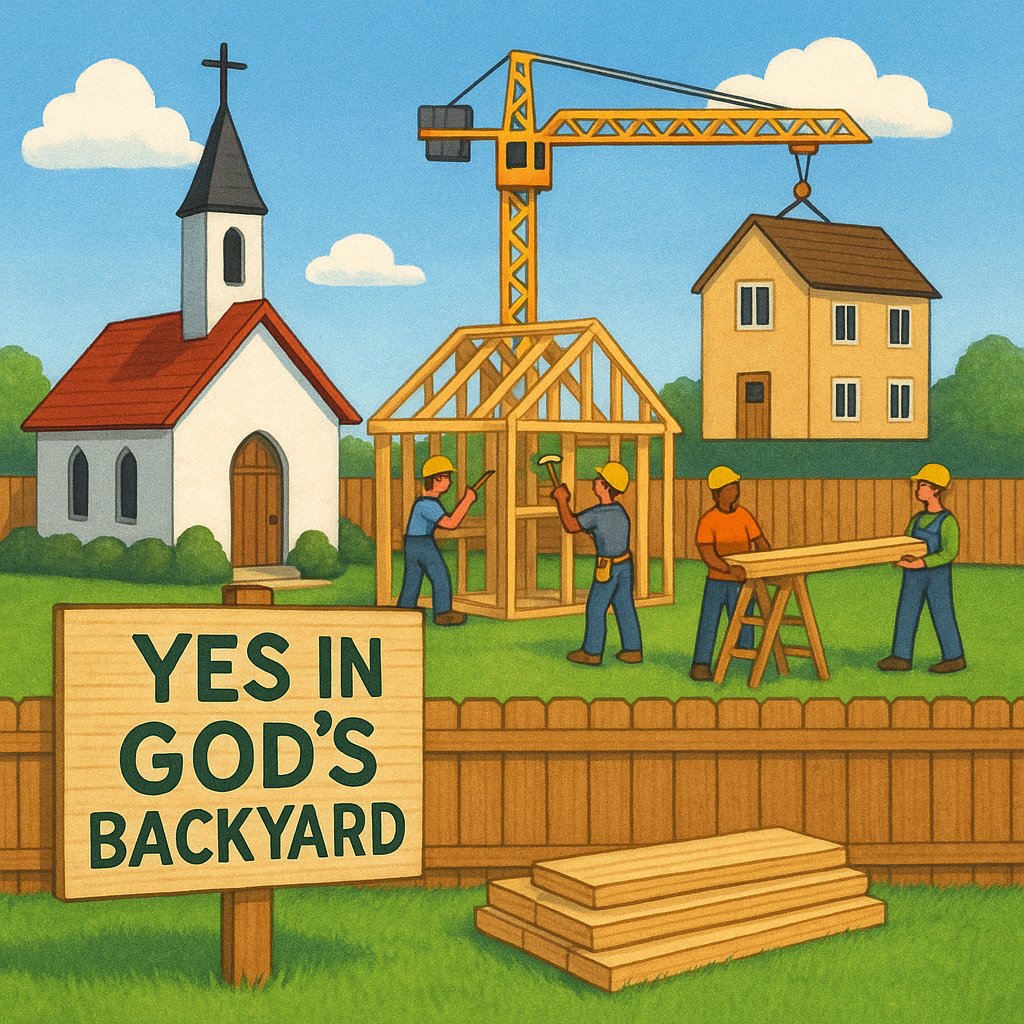
n our latest episode of Who Owns Boulder, we explored an inspiring and rapidly growing movement: Yes In God’s Backyard (YIGBY). We were honored to be joined by three i… Read more
Jill Grano | April 6, 2025
Real estate isn't about buying and selling anymore; it's where ambition meets imagination and reshapes skylines. In 2025, the game isn't played by those who play by th… Read more

January 22, 2025
Boulder City Council Zoning Changes
Jill Grano | December 12, 2024
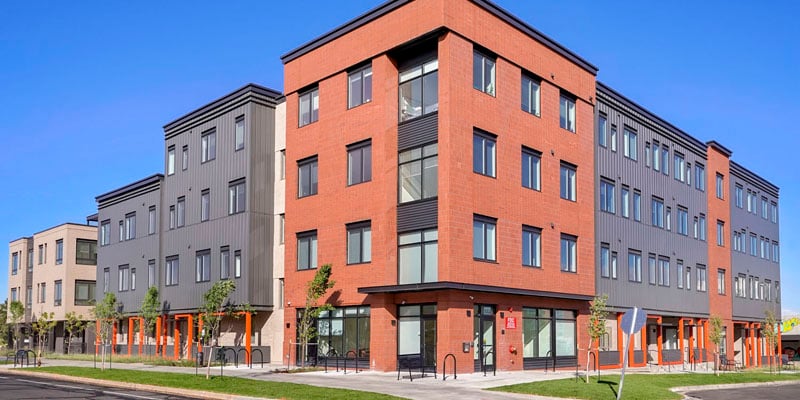
Airing every fourth Wednesday at 8:30 a.m., Who Owns Boulder investigates the factors influencing housing affordability, availability, and community resilience. The se… Read more
Press Release
Jill Grano | September 18, 2024
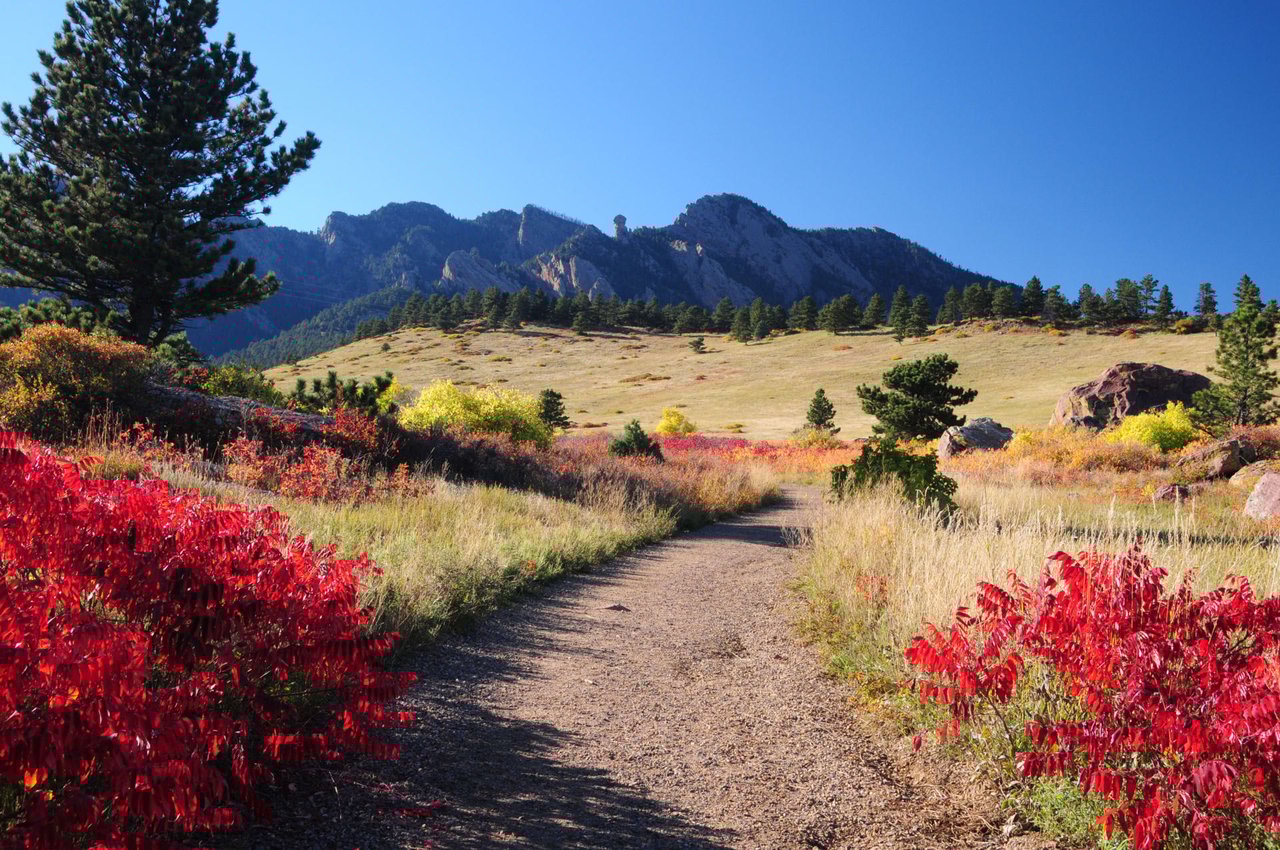
The revamped webpage was designed for prospective buyers who are interested in South Boulder homes for sale and want to learn more about moving to the area.
With almost two decades of housing and real estate experience in professional, political, and academic settings, Jill brings a level of knowledge and expertise that is rare in the industry. She is committed to providing exceptional customer service and delivering results that exceed clients' expectations.